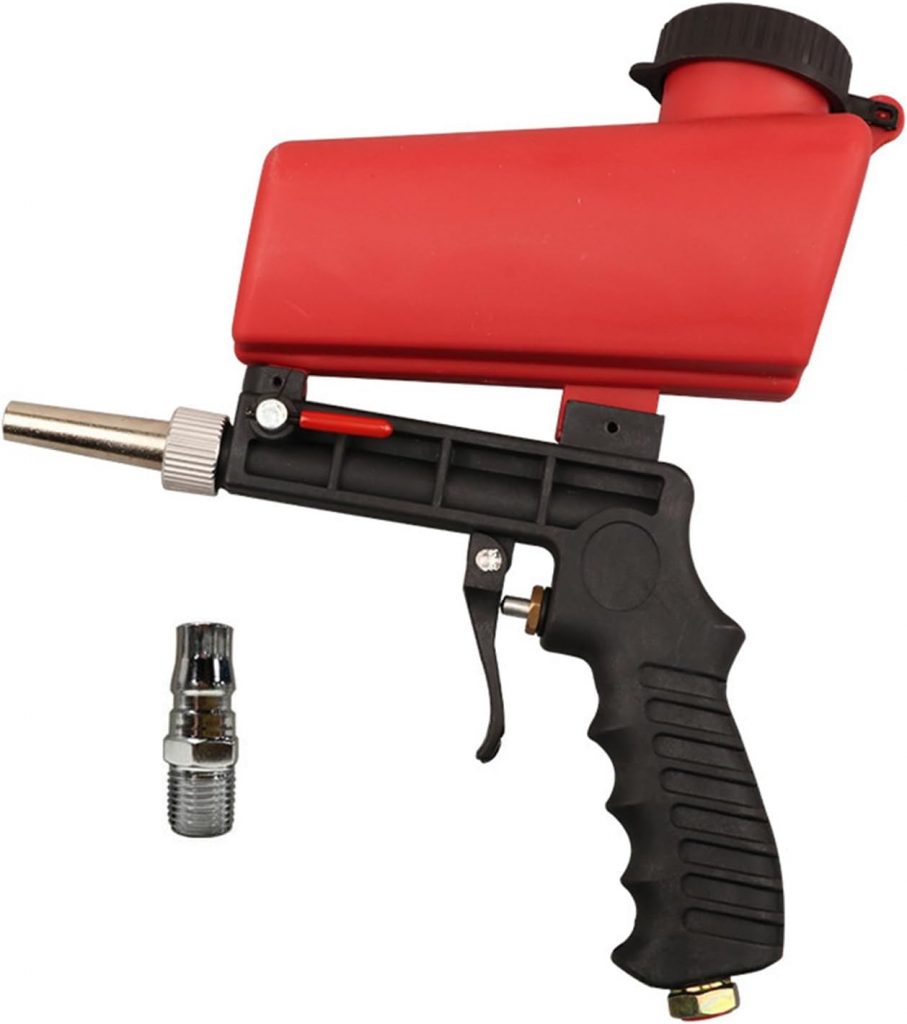
5 Stars – Easy to Use – Great for DIY Projects
🛠️ Overview
Sandblaster guns with a gravity feed design use a small hopper on top that feeds blasting media (like sand, soda, or glass beads) into the compressed air stream by gravity — ideal for smaller DIY tasks or occasional use. They’re affordable and simple compared to large blast cabinets or pressure pots
⭐ Performance Summary
🔹 Pros
✔ Easy to Use & Affordable
These sandblaster guns run off a standard air compressor set around ~90 PSI and usually have a simple trigger and gravity-fed hopper — no complex hookups. Many users highlight how accessible they are for small restoration or rust-removal tasks.
✔ Adjustable Flow (on some models)
Some versions include a flow control that lets you dial in how much abrasive is mixed into the air stream, which is useful for different surfaces.
✔ Lightweight & Portable
Compared with heavy cabinet systems, handheld gravity blasters are lightweight and easier to maneuver around a part or project.
⚠️ Cons & Limitations
⚠ Not Heavy-Duty
These tools aren’t made for industrial or large-scale blasting. As one review notes, they’re great for smaller projects, rust, and paint removal, but aren’t as powerful or consistent as professional blast equipment.
⚠ Compressor Requirements Matter
A lot of success with these guns depends on your air supply. Many hobby compressors struggle to keep up — low CFM can cause the gun to just blow air with little blasting media output. Users often remind others that a proper compressor with steady 90 PSI and adequate CFM is key.
⚠ Clogging & Feed Issues
Some people report that these guns can clog, spit air only, or have inconsistent feed if the abrasive isn’t dry or the nozzle sizing isn’t matched to pressure and media. Keeping media dry, sifted, and using the right grit helps, but it’s a noted annoyance for many buyers.
⚠ Mixed Build Quality
Lower-priced units (e.g., very cheap handheld guns) may have plastic or poorly machined parts, leading to reduced durability or issues with nozzle sealing. Higher-rated versions tend to use metal nozzles and sturdier bodies.
🧠 Best Use Cases
👍 Works well for:
- Small parts and wheels
- Rust or old paint removal on light-to-medium tasks
- DIY automotive components, metal tools, trim pieces
- Occasional home projects
🚫 Not ideal for:
- Full-size frame sandblasting
- Heavy corrosion or thick layers on large surfaces
- Frequent, professional shop use without better equipment
🛡️ Tips for Best Results
- Use the right media: Fine, dry media flows better and reduces clogging.
- Match air supply to tool specs: If your compressor runs out of air quickly, the blasting won’t be powerful or continuous.
- Wear protective gear: Sandblasting is messy, and silica particles are dangerous to inhale — a proper respirator, hood, and gloves are essential.
📌 Final Verdict
If you’re a DIY enthusiast or light-use hobbyist, a gravity feed sandblaster gun that works around 90 PSI can be a great budget option for cleaning parts, prepping metal, and doing surface work without huge equipment. However, these aren’t a substitute for industrial blast cabinets or pressure pots — they’re simple, affordable, but have performance and build-quality limits you should know before buying.
0 Comments